

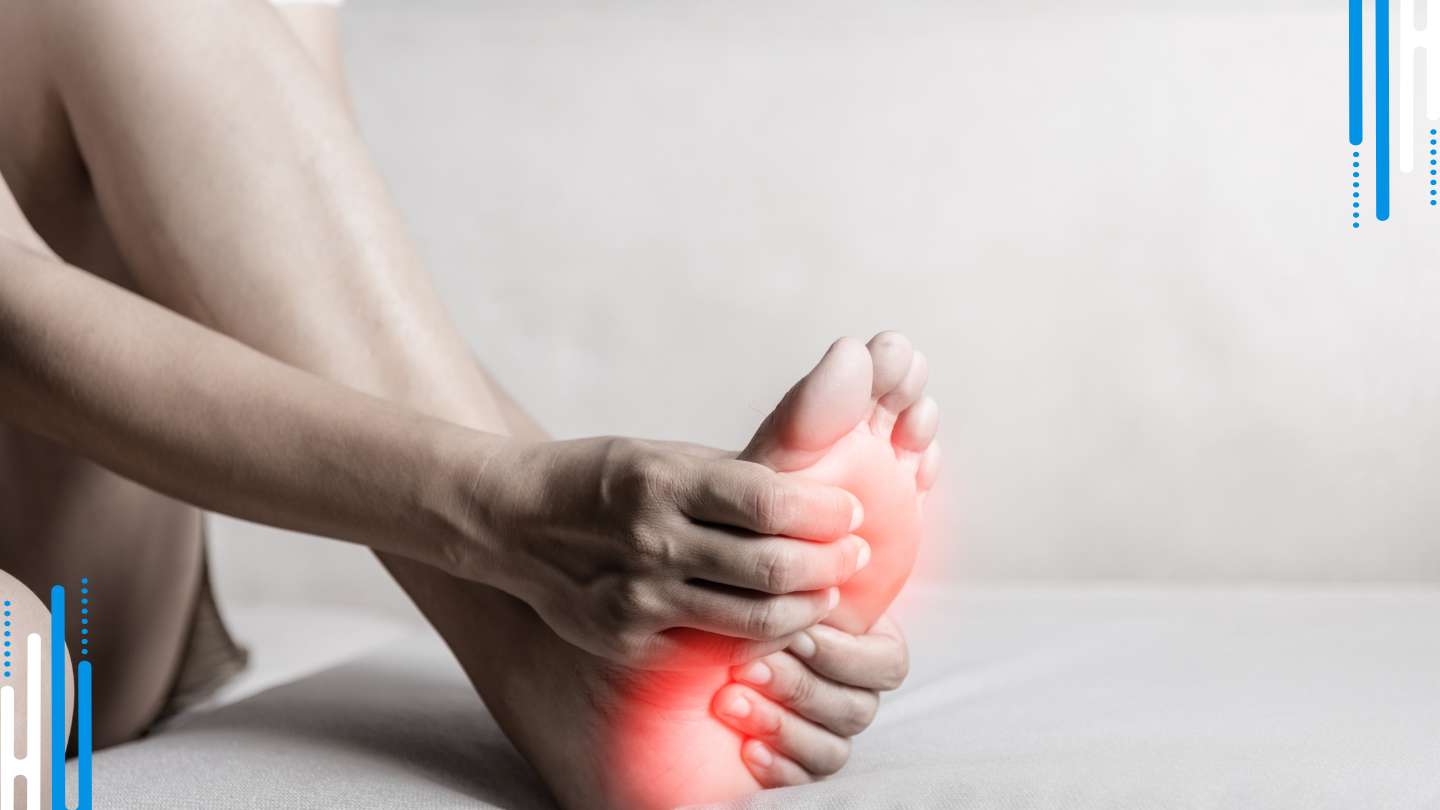
Burning feet, tingling hands, a numb patch of face, electric jolts down a leg, or a deep ache in the limbs that no position relieves: these are the complaints behind the searches for benzodiazepine withdrawal and nerve pain. The pain is real, and it can be severe. Yet, it is rarely what it feels like.
Nerve-type pain during withdrawal is a documented withdrawal symptom, not a new disease and not damage to the nerves themselves. It appears because a nervous system that adapted to years of a calming drug is, for a time, firing far too easily. So, what is happening in the nerves, and what can be done about it?
The Ashton Manual, written by Professor C. Heather Ashton and published at benzo.org.uk, lists the symptoms of withdrawal in its Chapter III. Table 1 of that chapter names pain and stiffness in the limbs, back, neck, teeth and jaw, along with tingling, numbness and altered sensation in the limbs, face and trunk. The same table lists muscle twitches, jerks and what patients describe as electric shocks.
Professor Ashton also wrote about how long the sensory symptoms can last. Table 3 of Chapter III, on protracted withdrawal symptoms, lists tinnitus, tingling, numbness, deep or burning pain in the limbs, a feeling of inner trembling or vibration, and strange skin sensations, and it describes them as gradually receding but possibly lasting at least a year and occasionally several years.
That is a hard sentence to read while the pain is happening, yet it holds the two facts that matter most: the symptoms are expected, and they recede.
Benzodiazepines work by strengthening the effect of gamma-aminobutyric acid (GABA), the main calming messenger in the brain and spinal cord. With months or years of daily use, GABA receptors become less responsive, a process called down-regulation, and the excitatory systems that GABA normally holds in check grow stronger to compensate.
When the dose falls, the calming side is weak and the excitatory side is still turned up. Professor Ashton described the result plainly: nearly all the excitatory mechanisms in the nervous system go into overdrive, and the brain and the peripheral nerves are left in a hyperexcitable state.
Sensory nerves are part of that peripheral system. Signals that would normally be filtered out as background, such as the pressure of a sock, get amplified into burning, tingling or pain. This is sensory hypersensitivity, a state rather than an injury, and Chapter III of the Manual states that there is no evidence benzodiazepines cause permanent damage to the brain, the nervous system or the body.
While no analogy is perfect, a nervous system in withdrawal is a smoke alarm turned up until it shrieks at toast: nothing is on fire, the alarm settles slowly on its own, and the job is to let it settle rather than silence it with a second drug.
People with severe withdrawal pain sometimes end up in an emergency room and are treated there as if they were seeking drugs. Unfortunately, a doctor who has not read the Manual may reach the wrong conclusion, and the person goes home with a label instead of help.
The person in that scene usually took the medication as a doctor prescribed it, for years, on the assurance that it was safe. Their nervous system adapted. Physical dependence is not addiction. It is a medical condition caused by the medication, and it calls for a gradual medical taper rather than an addiction label.
In Dr. Mark Leeds’ practice in Fort Lauderdale, Florida, the pattern is familiar: a person never told about dependence, now in pain, and being treated as a problem. What that person needs is a doctor who recognizes the symptom and a taper slow enough for the nervous system to keep up.
Withdrawal can also produce a tight band across the chest, a burning or stabbing pain in the chest wall, or altered sensation across the trunk. The Manual lists altered sensation of the trunk, and it notes that palpitations, a pounding heart, a rapid pulse, sweating and breathlessness usually accompany the panic attacks withdrawal can bring. Those symptoms can feel exactly like a heart attack.
A withdrawal explanation for chest pain is acceptable only after a cardiac cause has been excluded, and no article can do that for you.
Call 911 or go to the emergency room if chest pain or pressure is new, crushing or brought on by exertion, if the pain spreads to an arm, the jaw, the neck or the back, or if it comes with shortness of breath, sweating, fainting, or a racing or irregular heartbeat. Once the heart has been cleared, chest-wall pain and tightness are handled like the rest, with time and a slower taper.
Nerve pain that flares after a dose reduction is the nervous system reporting that the step was too big or came too soon. The first response is to hold the dose where it is, not to push on. Chapter II of the Manual says the reader can stand still at a stage in the schedule and take a vacation from further withdrawal for a few weeks, and that the best judge of pace is the patient.
The Manual describes the size of a step as up to one tenth of the dose at each reduction, with the interval adjusted to how the person feels. The shape matters more than the numbers: small steps, longer holds when symptoms flare, and no step taken while the last one is still being felt.
Gentle movement such as walking or stretching keeps stiff, painful limbs from locking up, and regular sleep, as much as withdrawal allows, gives the nervous system its best chance to reset. Neither is a cure, and neither does harm.
Fortunately, time does the rest. The symptoms recede as the receptors return toward normal, and there is usually nothing that can move that process along any faster. Long-lasting pain wears people down, and anyone who begins to have thoughts of harming themselves should call or text 988, the Suicide and Crisis Lifeline, or call 911.
The first thing to avoid is stopping abruptly. The 2020 boxed-warning update from the United States Food and Drug Administration (FDA) states that stopping benzodiazepines abruptly or reducing the dose too quickly can cause withdrawal reactions, including seizures, that can be life-threatening, and it directs prescribers to use a gradual taper. Call 911 for a seizure or for any medical emergency.
The Manual allows one narrow exception: triazolam (Halcion), a very short-acting drug, can be stopped abruptly without switching to a long-acting benzodiazepine. Dr. Leeds prefers a gradual taper even there, consistent with the FDA label update.
The second thing to avoid is treating the withdrawal from one drug by adding another. Medications marketed for nerve pain are often suggested at this point, and many of them carry their own physical dependence and withdrawal, so the person ends up with two tapers instead of one, and Dr. Leeds also helps patients taper other psychiatric medications when that has already happened.
The Manual, in Chapter III, says that no medication substitutes for a benzodiazepine except another drug of the same kind, which only trades one dependence for another, and it does not recommend extra medication for routine use. Dr. Leeds’ practice tapers such medications rather than starting them.
For potent, short-acting benzodiazepines, the Manual advises switching to diazepam, a long-acting drug that is metabolized slowly. Chapter II explains the switch, and Table 1 of the Manual’s first chapter gives the equivalent doses. This crossover taper removes the daily rise and fall that drives interdose withdrawal, the symptoms that surface as each dose wears off.
The Maudsley Deprescribing Guidelines describe the shape of the steps. Because the drug’s effect changes most at the low end of the dose range, the Guidelines describe hyperbolic reductions: each step is a fraction of the current dose rather than of the starting dose, so the steps shrink as the dose falls, and the final stretch is the slowest of all. That is the opposite of the fixed, evenly spaced cuts many people were handed.
Dr. Leeds uses the crossover where it helps, and the reductions follow the patient’s symptoms, as described in how Dr. Leeds applies the Ashton Manual. A person tapering clonazepam (Klonopin) will find the practical details in the Klonopin tapering guide on this site.
Dr. Leeds is an osteopathic physician and deprescribing specialist in Fort Lauderdale, Florida. His practice offers one service, medically supervised benzodiazepine and z-drug tapering, on a concierge basis for patients in Florida, with Dr. Leeds himself at every visit. There is no facility and no fixed timeline, and a taper runs over months, sometimes longer, at the pace the patient’s nervous system sets.
Before any change in Dr. Leeds’ practice, he explains the risks first, the alternatives, and the plan for coming off the drug, and the patient may pause, slow down or decline at any point. Nerve pain in that setting is information about the taper, not a symptom to be medicated away. Contact Dr. Leeds to discuss a supervised taper.
This article is educational. It is not medical advice, and reading it does not create a doctor-patient relationship. Decisions about starting, continuing, or tapering any medication should be made with your own physician.

Mark Leeds, D.O. is an osteopathic physician and deprescribing specialist in Fort Lauderdale, Florida. He helps patients come off benzodiazepines and sleeping pills with a slow, patient-directed taper guided by the Ashton Manual and the Maudsley Deprescribing Guidelines. Physical dependence is not addiction, and a careful taper is measured in months, not days.
Contact Us for expert guidance on safely tapering off benzodiazepines and reclaiming your life.