

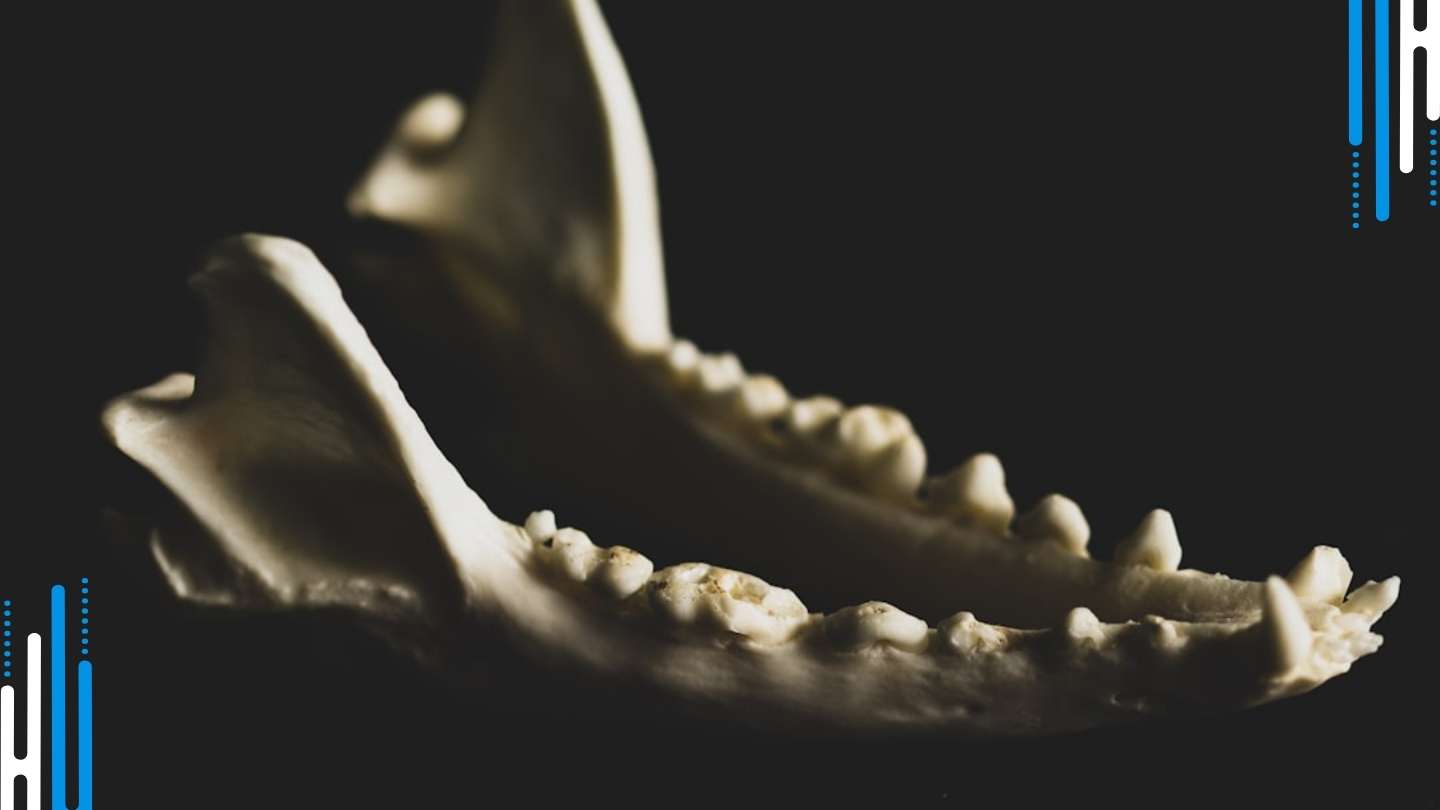
Yes. Waking with a sore jaw, a dull headache and teeth that feel tender is a recognized part of benzodiazepine withdrawal, and it appears in the Ashton Manual’s own symptom list. Table 1 in Chapter III, the chapter on withdrawal symptoms, lists pain and stiffness in the limbs, back, neck, teeth and jaw among the physical symptoms, and the text explains that pain in the jaw and teeth is probably due to involuntary jaw clenching, which often occurs unconsciously during sleep.
Dentists call this bruxism, and many patients do not connect it with their medication at all. Patients often tell Dr. Mark Leeds, an osteopathic physician and deprescribing specialist in Fort Lauderdale, Florida, that the grinding arrived with no obvious cause, on a dose unchanged for years or just after the first reduction. Symptoms on an unchanged dose are sometimes called tolerance withdrawal, and the connection matters because the fix is different once the cause is known.
It also helps to say plainly what this symptom is not. A person whose jaw clenches at night because a prescribed benzodiazepine is being reduced has a nervous system adjusting to less of a drug, and dependence is not addiction. The body adapted to the medication the way any body would, and now it needs time and a gradual taper to adapt back.
Benzodiazepines strengthen the effect of gamma-aminobutyric acid (GABA), the brain’s main calming chemical messenger. With steady use over weeks or months the brain compensates for that extra calming by turning its own sensitivity down, which is the physical dependence the 2020 United States Food and Drug Administration (FDA) boxed-warning update says can develop even when the medication is taken as prescribed.
When the dose falls, the compensation is still in place and the calming is not. The Ashton Manual describes the result as rebound overactivity in every system the drug had been damping down, with nerves that become hyperexcitable and produce tremor, tics, jerks, spasm and twitching. The Manual lists stiffness in the limbs, back, neck and jaw among the muscle symptoms and attributes the muscle pain to that constant tension.
The jaw muscles are strong, and they work hardest when no one is watching, during sleep. So, the same overactivity that shows up as anxiety in the mind and agitation in the body shows up in the mouth as clenching and grinding. Agitation, anxiety and a clenched jaw are three faces of one condition, not three separate problems.
Stress makes it worse, and a stressful week during a taper will often bring the sore jaw back. Yet, stress alone does not explain it. The origin is a nervous system that has lost the calming the drug supplied, which is why relaxation techniques help but rarely finish the job on their own.
Think of a guitar string tightened a quarter turn past where it should sit. Every note comes out sharp, and the jaw is one of the strings pulled tightest. Loosening the peg slowly, a little at a time, is the entire method.
Most patients notice it on waking: a jaw that aches or feels tired, teeth that are sensitive to cold, and a headache that sits across the temples or the back of the head. The Manual notes that withdrawal headaches are usually of the tension type, caused by contraction of the muscles at the back of the neck, scalp and forehead, and clenching feeds that same pattern.
Over months, grinding can flatten or chip the biting edges of the teeth and wear through enamel, and the hinge of the jaw in front of the ear can become sore and click. How much damage occurs depends on how hard and how long a person clenches, and a dentist is the right judge.
To be accurate, the Manual describes jaw and teeth pain from involuntary clenching as one physical symptom among many. It does not describe bruxism as a separate syndrome of withdrawal, and nothing more should be claimed for it. The practical point is narrower: the clenching is real, and the teeth can be protected while the cause is addressed.
The single most useful step is a custom night guard fitted by a dentist. A pharmacy guard works in a pinch, but a custom guard fits the bite, stays in place, and spreads the force of clenching so the teeth do not take it edge to edge. The guard does not stop the clenching. It protects the teeth from what the clenching does.
Tell the dentist about the taper. A dentist who knows that a benzodiazepine is being reduced can check for wear, watch the jaw joint, and avoid offering a sedative for dental anxiety that would undo weeks of careful reduction. Many dentists will not have come across benzodiazepine withdrawal, so a short explanation at the start of the visit helps.
Small daytime habits help more than they seem. Teeth apart, lips together, tongue resting on the roof of the mouth is the position a relaxed jaw takes, and checking for it a few times an hour catches daytime clenching before it becomes a habit. Chewing gum, biting nails, and hard or chewy foods keep the muscles working and are worth setting aside for a while.
Warmth on the sides of the face, followed by gentle circular massage of the thick muscle at the angle of the jaw, eases the soreness for most people. Slow breathing before bed, a quiet last hour without screens, and going to bed at the same time each night reduce the arousal that drives nighttime clenching. None of this is a cure, and it does not need to be.
The point of these measures is comfort and protection while the nervous system regains its own balance. Fortunately, that balance does return for most people, given time. As the taper proceeds and the brain resets its sensitivity to GABA, the clenching usually fades along with the tremor and stiffness.
A sudden return of jaw clenching, especially with worse sleep, tremor or rising anxiety, usually means the last reduction was too large or came too soon. Chapter II of the Ashton Manual is direct about who decides the pace: the patient is usually the best judge and must proceed at a speed that is comfortable. The same chapter says a person can stand still at one stage of the schedule and take a break from further reduction for a few weeks when circumstances change.
The shape of a taper matters as much as its speed. Professor C. Heather Ashton advised reducing by up to one tenth of the current dose at each step, and the Maudsley Deprescribing Guidelines describe hyperbolic reductions, in which each cut is smaller than the one before as the dose falls, because at low doses each small amount of the drug has a larger effect on the brain than it did at high doses.
For patients on a short-acting benzodiazepine, Professor Ashton’s crossover taper to diazepam, which leaves the body slowly and gives a smooth fall in blood level, often makes the steps gentler and the jaw quieter. A smoother fall between doses means fewer sharp swings for a nervous system that is already on edge.
What a person should not do is stop early to get it over with. The 2020 FDA boxed-warning update states that stopping a benzodiazepine abruptly or reducing the dose too quickly can cause withdrawal reactions, including seizures, that can be life threatening. Call emergency services for a seizure or any medical emergency.
Dr. Leeds’ practice does one thing: medically supervised tapering of benzodiazepines and z-drugs. He works with every patient himself, by telemedicine throughout Florida, with no one else delivering the care. A flare of jaw clenching is information about the taper, not a failure of the patient.
His response is usually a hold, then a smaller step, sometimes a crossover taper to diazepam as the Ashton Manual describes, and sometimes a compounded liquid so that each reduction can be tiny. The pace belongs to the patient, and Dr. Leeds sees his job as advising a slower taper when the rate is too fast and agreeing to a slightly faster one when the patient asks. Tapers in his practice take months, and sometimes longer, because that is what nervous systems need.
Informed consent runs through the whole process: the risks are discussed first, the alternatives are laid out, the exit plan is written from the start, and the patient may decline or change course at any point. There are no support-group programs, no facility stays, and no fixed timelines. The dentist protects the teeth, the patient sets the pace, and the physician adjusts the plan.
A sore jaw in the middle of a taper is a reason to talk, not a reason to push through, and patients anywhere in Florida can bring it to Dr. Leeds’ practice, where one physician works with one patient at a time. Contact Dr. Leeds to discuss a gradual, medically supervised taper.
This article is educational. It is not medical advice, and reading it does not create a doctor-patient relationship. Decisions about starting, continuing, or tapering any medication should be made with your own physician.

Mark Leeds, D.O. is an osteopathic physician and deprescribing specialist in Fort Lauderdale, Florida. He helps patients come off benzodiazepines and sleeping pills with a slow, patient-directed taper guided by the Ashton Manual and the Maudsley Deprescribing Guidelines. Physical dependence is not addiction, and a careful taper is measured in months, not days.
Contact Us for expert guidance on safely tapering off benzodiazepines and reclaiming your life.