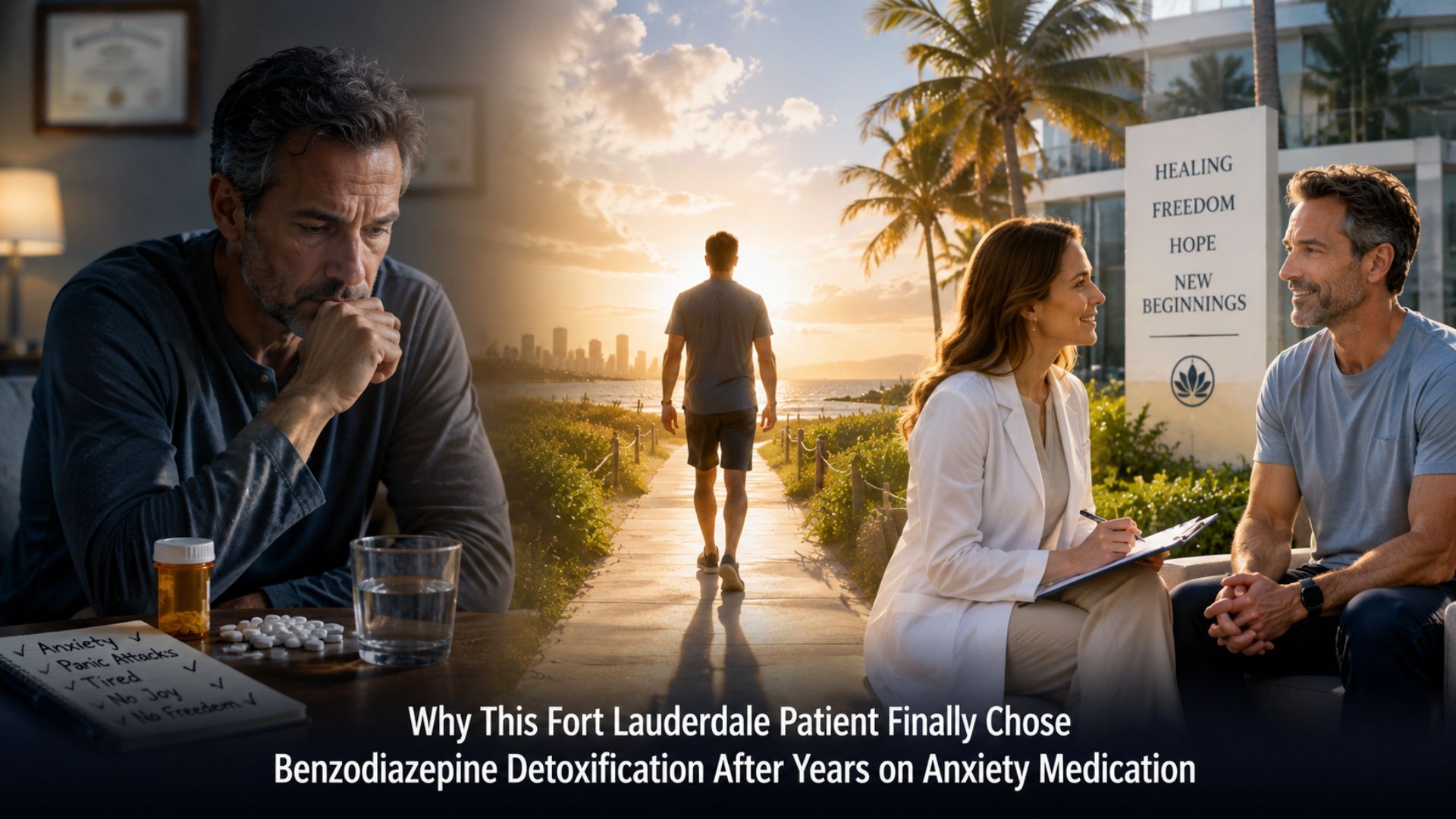
Anxiety medication can provide temporary relief for individuals struggling with panic attacks, stress, and overwhelming emotional discomfort. However, long-term benzodiazepine use may eventually create physical dependence, emotional numbness, and difficulty functioning without medication support. Many people reach a point where they begin questioning whether continuing medication is truly improving their quality of life. This blog outlines why this Fort Lauderdale patient finally chose benzodiazepine detoxification after years of anxiety medication and how professional treatment helped create a healthier path toward recovery. It also explains the emotional challenges of long-term medication use, the risks of dependence, and the importance of receiving proper detoxification support for long-term emotional wellness.
Anxiety Medication Initially Seemed Effective
When the patient first began experiencing severe anxiety symptoms, daily life became emotionally exhausting and difficult to manage. Panic attacks, racing thoughts, and constant fear affected work performance, relationships, and overall emotional health. Benzodiazepines were prescribed to reduce these symptoms and help create stability during stressful situations. In the beginning, the medication appeared extremely helpful because it provided quick emotional relief and improved the patient’s ability to function normally throughout the day.
Over time, the patient became increasingly dependent on the calming effects of the medication to handle everyday situations. Simple tasks and stressful moments felt easier only after taking prescribed doses, which slowly created emotional reliance on the medication. Because the treatment originally seemed successful, there was little concern about needing to choose the right benzo detox center when long-term use began affecting mental and physical health.
Dependence Slowly Took Control of Daily Life
After years of regular use, the medication no longer created the same level of relief it once did. Anxiety symptoms started returning between doses, and emotional discomfort became stronger whenever medication schedules changed unexpectedly. The patient began noticing that daily routines revolved around prescriptions, refill appointments, and fear of withdrawal symptoms rather than genuine emotional recovery or mental well-being. This realization became emotionally exhausting and increasingly difficult to ignore.
The patient also experienced emotional numbness, reduced concentration, memory problems, and began wondering if the brain can recover from benzodiazepines after years of struggling to feel mentally present. Relationships became strained because emotional connection started fading over time, while work responsibilities became harder to manage due to fatigue and lack of focus. These emotional and physical struggles explain why this Fort Lauderdale patient turned to benzodiazepine detoxification after years on anxiety medication instead of continuing to rely on medication that no longer felt healthy or effective.
Professional Detoxification Offers Support
One of the most important turning points in recovery came when the patient realized detoxification did not need to happen alone. Professional detox programs provide medical supervision, emotional guidance, and structured treatment plans that help individuals manage withdrawal symptoms more safely. Understanding that there would be experienced professionals available during recovery made treatment feel less frightening and more achievable than previous attempts to quit independently.
Medical supervision also helped reduce fear surrounding withdrawal complications and emotional discomfort during detoxification. Instead of struggling through severe anxiety alone, the patient received support from professionals who understood the challenges associated with benzodiazepine dependence. This supportive environment created reassurance while helping build confidence throughout the recovery process. Feeling understood and supported emotionally became one of the most meaningful parts of treatment.
Emotional Health Continued Declining

As dependence became stronger, emotional well-being slowly continued declining despite ongoing medication use. The patient noticed increasing emotional disconnection from loved ones and struggled to maintain motivation throughout daily life. Activities that once felt enjoyable no longer created excitement, while constant emotional exhaustion made it difficult to feel positive about the future. Although medication was originally meant to reduce anxiety, concerns about the long-term effects of benzodiazepines on the brain became harder to ignore as emotional limitations affected overall quality of life.
Family members and close friends also noticed significant personality changes and growing emotional distance. Conversations about medication use became more common because loved ones were concerned about the patient’s emotional health and dependence on prescriptions. These discussions encouraged honest reflection about how much life had changed over the years. This growing awareness became another important reason why this Fort Lauderdale patient finally chose benzodiazepine detoxification after years of anxiety medication use.
Failed Attempts to Stop Increased Fear
Before seeking professional help, the patient tried reducing medication use independently several times without medical supervision. Every attempt resulted in severe discomfort, including insomnia, panic attacks, restlessness, irritability, and worsening anxiety symptoms. These experiences created fear because each failed attempt reinforced the belief that life without benzodiazepines would never feel manageable again. Instead of creating confidence, every withdrawal experience increased emotional stress and dependence on the medication.
The patient also worried about how withdrawal symptoms would affect work, family responsibilities, and overall emotional stability. Fear of experiencing severe anxiety again became one of the biggest reasons treatment was delayed for so long. Like many individuals dealing with prescription medication dependence, the patient believed recovery would feel impossible without medication support. Eventually, learning about tolerance withdrawal when benzodiazepines stop working changed this perspective and helped create hope that recovery could happen safely with professional support.
Therapy Helped Address Underlying Anxiety
During detoxification treatment, the patient learned that recovery involved more than simply stopping medication use. Therapy sessions focused on understanding emotional triggers, stress patterns, and unhealthy coping habits that had developed during years of anxiety medication dependence. This process helped the patient recognize how emotional stress had been managed primarily through prescriptions instead of healthier coping strategies or emotional processing techniques.
Counseling also helped develop practical skills for handling anxiety more effectively in everyday situations. Stress management exercises, emotional communication skills, and mindfulness techniques gradually replaced the constant reliance on medication for emotional stability. Learning these healthier habits created confidence that anxiety could still be managed successfully without depending completely on benzodiazepines for relief and emotional control.
Emotional Clarity Slowly Returned
As recovery progressed, the patient began experiencing emotional clarity that had been missing for years. Conversations felt more genuine, focus improved during daily activities, and emotional numbness slowly faded throughout the detoxification process. Family members also noticed positive changes in communication, mood, and emotional presence, which helped strengthen relationships that had become strained during years of medication dependence.
Although recovery included difficult moments, the patient gradually realized life no longer revolved entirely around prescription schedules or fear of withdrawal symptoms. Emotional independence became stronger with continued therapy and healthier routines, creating a sense of hope that had been missing for a long time. This emotional transformation further explains why this patient in Fort Lauderdale finally chose benzodiazepine detoxification after years of anxiety medication use instead of remaining trapped in long-term dependence.
Recovery Continued Beyond Detoxification
Completing detoxification became only the first step toward rebuilding a healthier lifestyle and emotional mindset. After treatment, ongoing therapy, stress management techniques, and supportive relationships continued playing important roles in maintaining long-term recovery. The patient focused on improving emotional awareness, creating healthier routines, and developing coping strategies that supported both mental and physical well-being without relying entirely on medication.
Over time, confidence slowly returned as emotional stability improved naturally through healthier habits and professional support. Anxiety did not completely disappear, but it became far more manageable without constant dependence on benzodiazepines. This new sense of independence created motivation to continue prioritizing emotional health and long-term recovery. The patient finally felt capable of living a more balanced and emotionally connected life again.
Seeking Help Created a New Beginning

The decision to pursue professional treatment completely changed the patient’s perspective on recovery and emotional health. What once felt impossible gradually became achievable through medical supervision, therapy, emotional support, and structured detoxification care. Instead of continuing to feel controlled by medication dependence, the patient gained the opportunity to rebuild confidence, emotional stability, and healthier coping strategies for the future.
This personal experience highlights why this Fort Lauderdale patient turned to benzodiazepine detoxification after years on anxiety medication instead of continuing the cycle of dependence. If you or someone you care about is struggling with long-term benzodiazepine use, our team is here to provide guidance and support throughout every stage of recovery. Contact us today to learn how our detoxification programs can help you begin a safer and healthier path forward.
Final Thoughts
Long-term anxiety medication use can slowly create emotional and physical dependence that affects daily life, relationships, and overall well-being. As discussed throughout this blog, the patient’s experience highlights how benzodiazepine dependence may gradually become overwhelming despite initially providing relief from anxiety symptoms. Professional detoxification, emotional support, therapy, and healthier coping strategies all played important roles in helping the patient regain emotional clarity and rebuild confidence. Understanding the risks associated with prolonged medication use can encourage individuals to seek safer and healthier recovery solutions before dependence continues affecting their quality of life.
At Benzodoc, we understand the importance of educating individuals about Benzodiazepines, effective benzodiazepine withdrawal symptom management, and the benefits of medically supervised benzodiazepine tapering for long-term recovery support. Our goal is to help individuals better understand the recovery process and available treatment options related to benzodiazepine detoxification in Fort Lauderdale through informative and supportive resources. Contact us today to learn how we can help you take the next step toward a healthier and more balanced future.