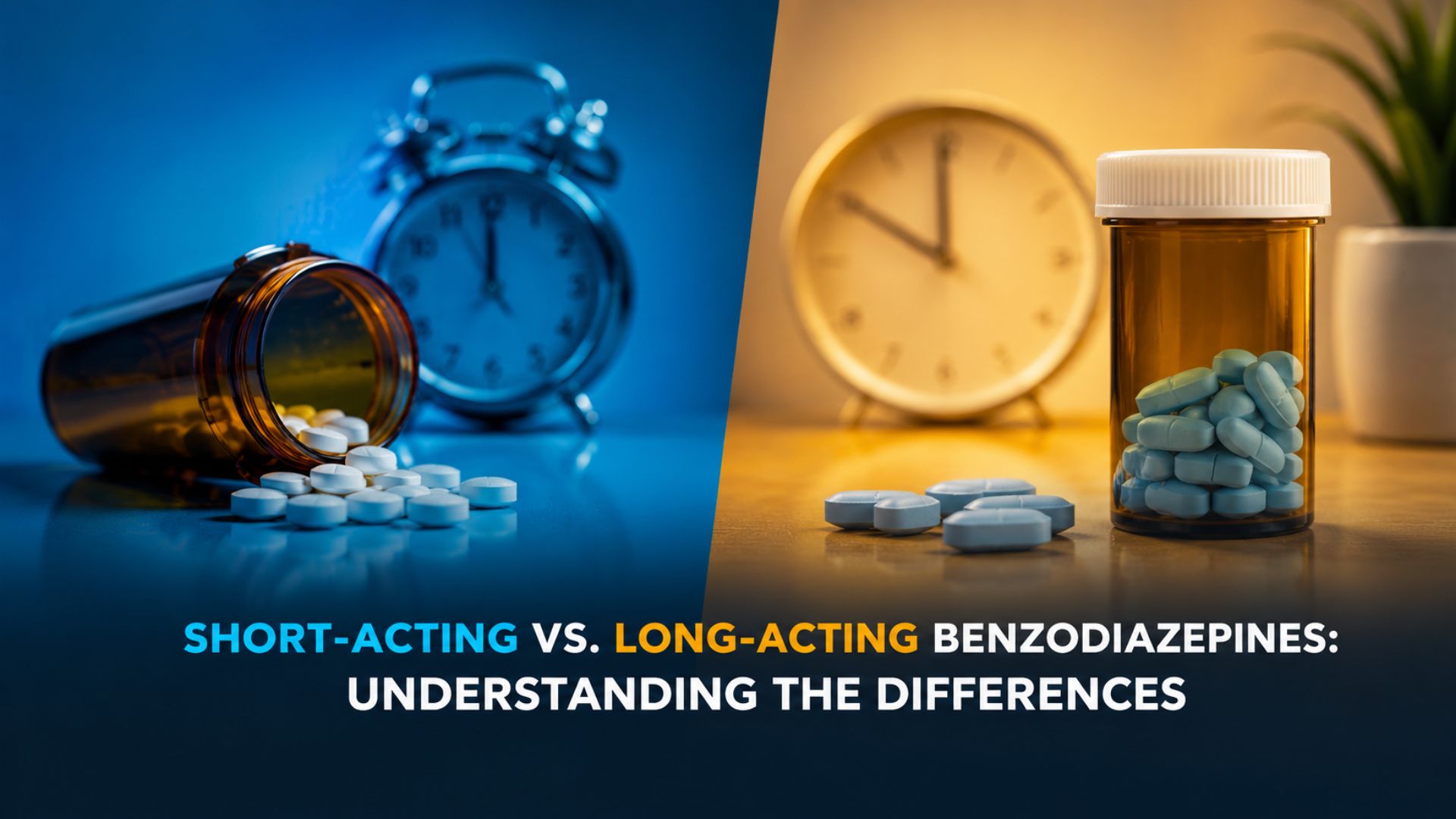
Search for benzodiazepine detox and Fort Lauderdale appears near the top of the results almost immediately. That is not an accident. South Florida is one of the densest treatment markets in the country, and its programs advertise heavily to people looking for help with benzodiazepine dependence.
If that search brought you here, the instinct behind it deserves respect. Benzodiazepines should never be stopped abruptly, and seeking professional help is the right decision. What follows is an honest look at what the Fort Lauderdale treatment market actually offers, what it cannot offer, and what a person dependent on a benzodiazepine actually needs.
Why Fort Lauderdale Has So Many Treatment Programs
South Florida has been a hub of the addiction treatment industry for decades. Warm weather, a large recovery community, and a steady flow of patients from around the country built an ecosystem of residential facilities, outpatient programs, and sober living homes. Marketing followed the market, and “recovery destination” became part of the region’s brand.
None of that is inherently bad. For some conditions, structured programs help many people. The question that matters here is narrower: does any of it fit benzodiazepine dependence? Answering that requires being clear about what benzodiazepines are and what long-term use does to the nervous system.
What Those Programs Offer, and What They Cannot
A typical facility program is built around a stay of 7, 10, 14, or 30 days, with the length set largely by insurance coverage. Days are filled with group therapy, twelve-step style meetings, and addiction recovery curriculum. The clinical goal is usually to have the patient substance free by discharge.
That structure was designed for addiction. Most benzodiazepine patients do not have one. They took a medication exactly as prescribed, and their brains adapted to it, a condition called physical dependence. Dependence is not addiction. It is a medical condition caused by the medication itself, and no amount of group programming addresses it, because there is no behavior to treat. What the condition requires is a slow, controlled dose reduction that no discharge date can accommodate.
The article on common myths about benzo recovery covers how often this confusion between dependence and addiction shapes what patients are told.
What Benzodiazepine Dependence Actually Requires
The Ashton Manual, the foundational reference for benzodiazepine discontinuation, recommends gradual reductions of roughly 5 to 10 percent every 1 to 2 weeks, adjusted continuously to the individual. Tapers built this way take months, commonly a year or longer. The 2020 United States Food and Drug Administration benzodiazepine label update formally recognizes physical dependence, withdrawal reactions, and the need for gradual dose reduction.
Rushing that process is not neutral. Abrupt or compressed discontinuation risks severe withdrawal symptoms and seizures, and repeated rapid attempts can produce kindling, in which each failed withdrawal makes the next one harder. A program that returns a patient home in two weeks, off the medication and without a taper plan, has delivered the opposite of safety. A grounding in safe tapering and discontinuation makes those risks easier to judge.
The Questions That Cut Through the Marketing
Brochures for recovery destinations describe healing environments and dedicated teams. The way to test any of it is to ask specific questions. How long does the benzodiazepine protocol run? Who controls the taper pace? Is the goal substance free by discharge? Is the program familiar with the Ashton Manual and the Maudsley Deprescribing Guidelines? What is the plan on the day after discharge?
The guide to choosing a benzo detox center in Fort Lauderdale works through these questions in detail, and a plain-language overview of what every patient should know about benzodiazepine withdrawal explains what the answers mean.
Where Fort Lauderdale Genuinely Delivers
Here is the honest version of the destination claim: Fort Lauderdale does offer something real for benzodiazepine patients, but it is not a facility bed. It is access to physician-level tapering care grounded in the Ashton Manual, delivered in an office or, more often, by secure telemedicine.
That last point changes the entire picture. Because medically supervised tapering happens at home, over months, through regular video visits, nobody needs to travel to a recovery destination at all. A patient in Fort Lauderdale, Orlando, or anywhere else in Florida can receive the same care in their own living room, while keeping their job, family routine, and support system intact. The destination, it turns out, is optional. The method is not, and it is documented openly in resources like the Ashton Manual method page and the site’s broader benzodiazepine information library.
What Dr. Leeds’ Practice Is and Is Not
BenzoDoc is the website of the medical practice of Mark Leeds, D.O., an osteopathic physician and deprescribing specialist based in Fort Lauderdale. The practice is not a treatment facility and does not offer residential stays, group programming, or fixed-length detox. It offers what benzodiazepine dependence actually calls for: individualized, gradual tapering supervised directly by a physician, with the pace set by the patient’s nervous system rather than by a calendar.
Patients meet with Dr. Leeds personally by telemedicine throughout Florida. Holds and slowdowns are treated as normal taper management. Dependence is treated as the medical condition it is, with the respect that a person injured by a prescribed medication deserves.
Final Thoughts
Fort Lauderdale earned its reputation as a treatment destination, but for benzodiazepine dependence the honest advice is different: judge every option, local or not, by whether it can deliver a slow, individualized, medically supervised taper. Most facility programs cannot. A physician practicing Ashton Manual-based tapering can, wherever the patient happens to live in Florida.
To talk through a taper with a physician who provides exactly that, contact Dr. Leeds today through the contact page.